The fear with a dark bedroom is always the same. That it will feel oppressive. That you will wake up in it and feel the walls pressing in.
That fear is almost always misplaced, and it is usually misplaced for a simple reason: the rooms people are afraid of are not dark rooms. They are badly lit dark rooms. The distinction matters.
A dark cottagecore bedroom works because of what it does with light, not despite what it does without it. The walls absorb. The windows give. Grey morning light falling across dark linen on an iron bed does not feel oppressive — it feels like the room has been waiting for you to wake up in it.
The starting point is always the bed. In a dark room, the bed is the object the light finds first. Dark linen in charcoal or unbleached natural tones sits differently against a near-black wall than white bedding does — it reads as intentional, as chosen, rather than as default. The texture matters more than the colour. Linen with visible weave. Cotton that has been washed enough times to go soft.
After the bed, the floor. Dark painted boards or quarry tile ground the room without competing with the walls. A worn rug in dusty rose or faded ochre provides warmth without brightness.
The objects in a dark bedroom should be few. A single ceramic vessel on a windowsill. An iron hook on the back of a door with one coat on it. The room does not need filling — it needs editing. Every object placed in a dark room is more visible than it would be in a pale one. That is a reason to choose carefully, not to choose more.
The cave feeling comes from clutter, from inadequate natural light, from walls that absorb without any surfaces catching what light there is. Solve those three things and the dark bedroom becomes what it should be — the room in the house that is hardest to leave in the morning.
From the shop
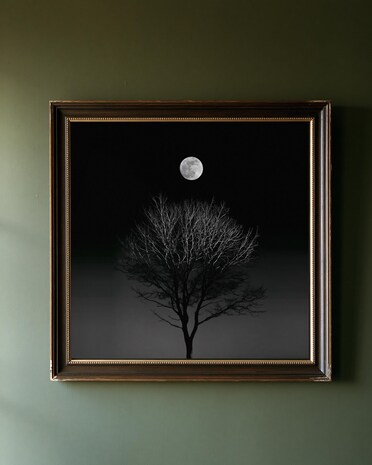
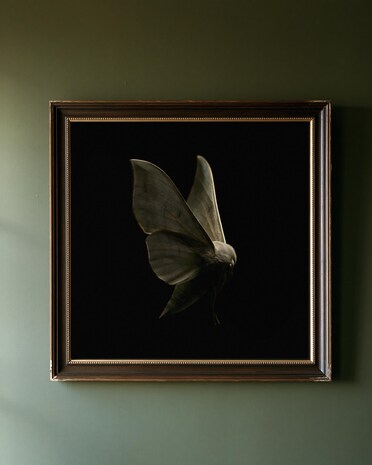
Prints from our own Duskwood Fell shop that suit this room. Instant digital downloads, printed at home or at any print shop.