
This post contains affiliate links. As an Amazon Associate, I earn from qualifying purchases — at no extra cost to you.
Ask someone what a reading nook needs and they’ll usually say “a whole room” — a library, a converted attic, the kind of square footage most houses don’t have to spare. But the nooks that actually get used aren’t rooms. They’re corners: a dead end of hallway, the deep end of a window bay, the landing halfway up the stairs that every other house treats as pass-through space. What turns a corner into a nook isn’t square footage. It’s five objects, chosen with more care than the room around them usually gets.
That’s the good news. You don’t need to find the room. You need to find the corner you’re already walking past, and put the right things in it.
The chair that isn’t part of a set
A reading chair has one job a sofa doesn’t: it has to want to be sat in alone, for an hour, without anyone negotiating the other cushion. That means it can be smaller and more particular than anything else in the house — a low-profile wingback, a slipper chair, something with a silhouette a matching three-piece living room set would never include.
A deep, muted velvet — olive, bottle green, oxblood — does here what it does everywhere else in a dark room: it reads as a decision, not a compromise, and it wears a lived-in look faster than a flat weave. Low to the ground and slightly undersized suits a nook better than a full club chair; you want to fold into it, not perch on the edge of it. Shop this olive velvet wingback reading chair →
The honest caveat: at this price point, check the current photos before you buy — a couple of recent buyers found one chair in a pair slightly different from the other at the seams. Minor, but worth a glance at the listing images rather than buying on the title alone.
One lamp, close enough to touch
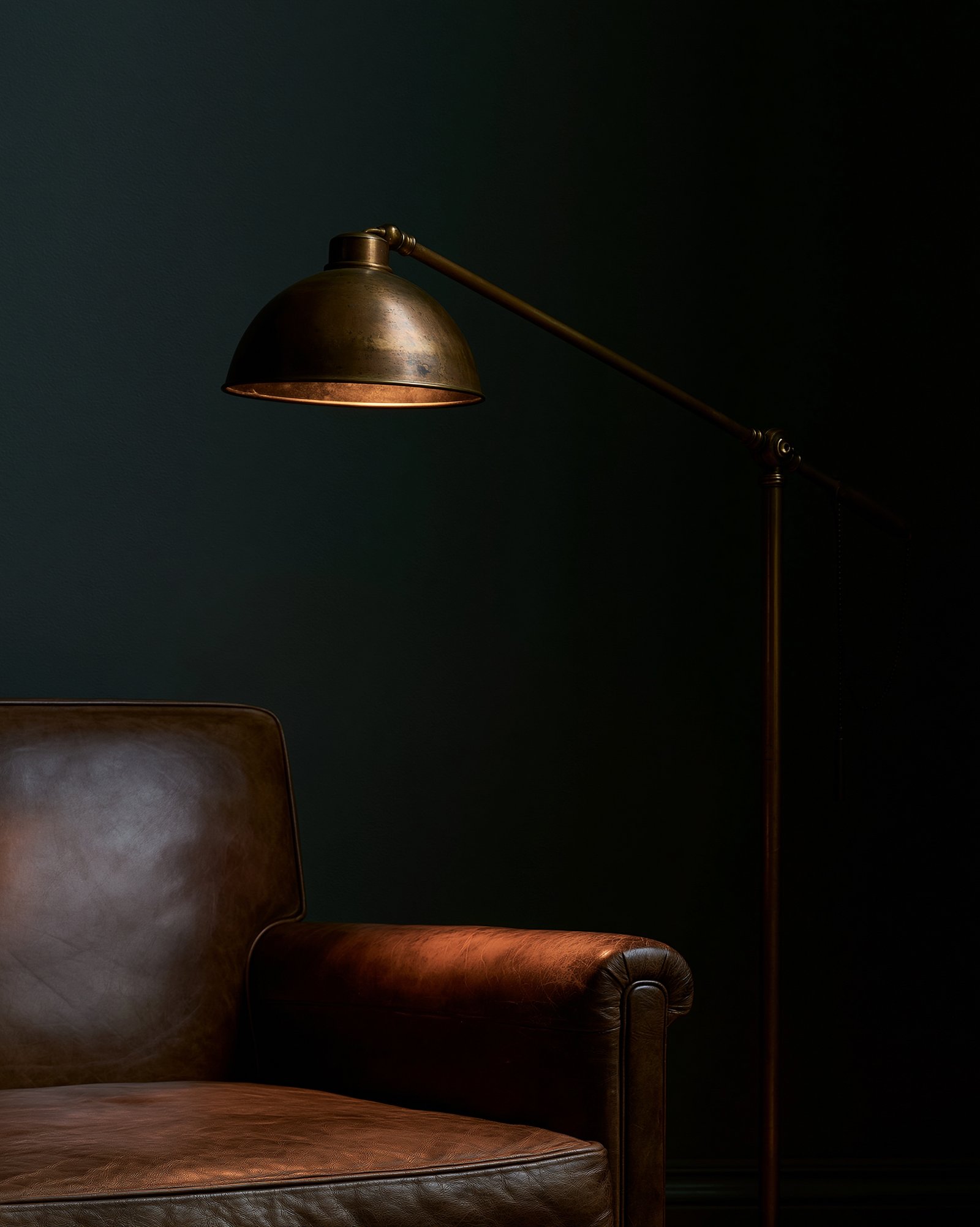
The one piece of hardware in the room that actually needs to be within arm’s reach.
Every other room in this house gets one lamp doing one job. A reading nook is the one place where that lamp isn’t just atmosphere — it’s the reason the corner works at all. Overhead light flattens a page the same way it flattens a dark wall, and a lamp positioned across the room means getting up to adjust it every time the light shifts.
A swing-arm floor lamp solves both problems at once: it throws a pool of warm, close light exactly where the book is, and an aged brass finish keeps that light warm-toned rather than clinical. This is the “pharmacy lamp” silhouette for a reason — it was built for exactly this job, adjustable height and reach included. Shop this aged brass swing-arm reading lamp →
A throw that’s already been used
Bare upholstery photographs fine and sits coldly. The detail that tells you a chair actually gets used — rather than staged for a photo once and left alone — is a throw draped over the arm, slightly disordered, in a weight heavy enough to mean something. A chunky, cable-knit throw in a deep, muted tone does this better than a thin cotton blanket ever will: it has enough physical presence to look intentional even when it’s half falling off the arm.
Match it close to the chair’s color family rather than contrasting it — a dark green throw over a dark green chair reads as one considered object, not two competing ones. Shop this chunky knit throw in dark green →
A table that holds tea, not a coffee table
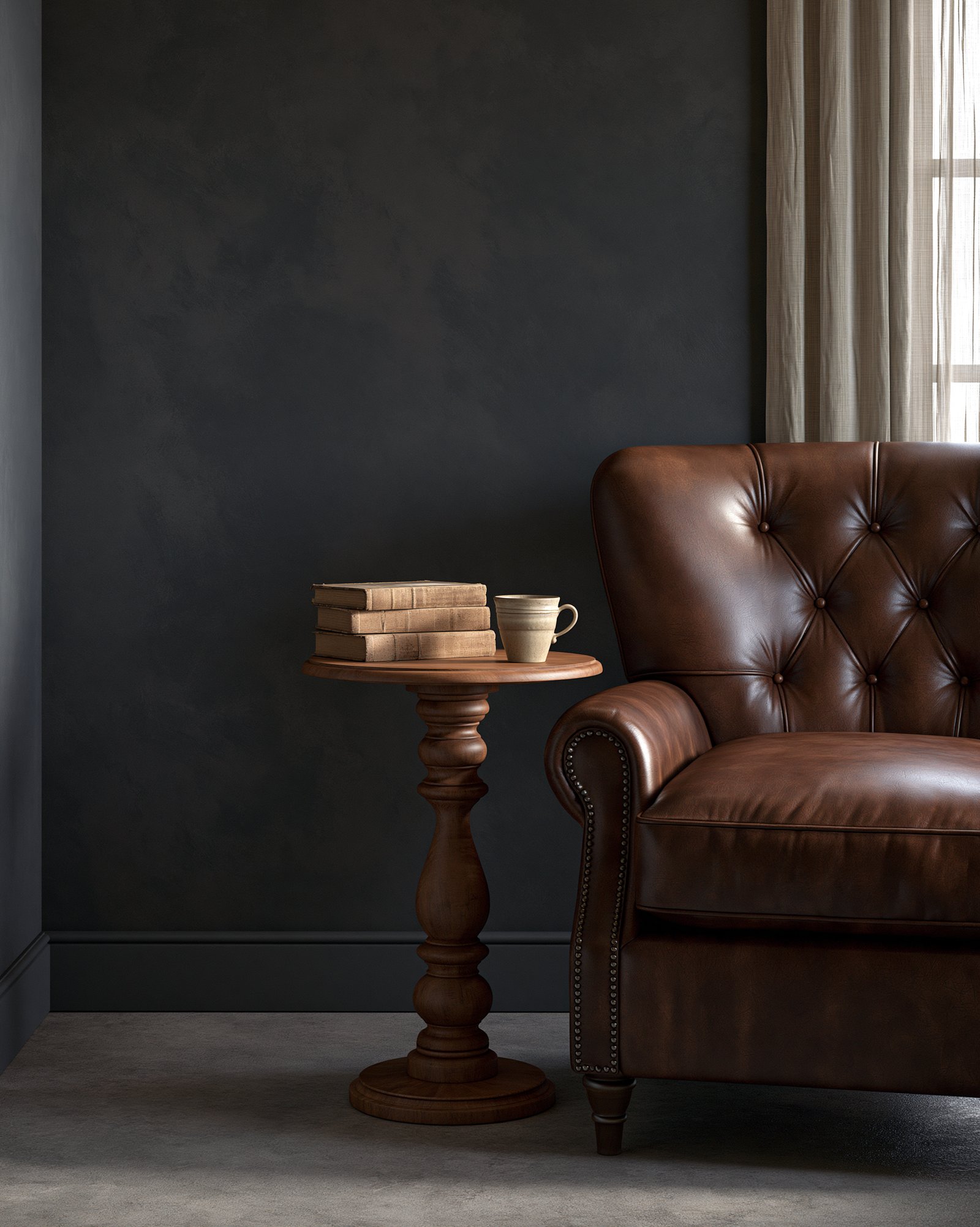
The table’s only job is to hold what’s already in your hands — nothing more.
A reading nook doesn’t need a coffee table. It needs a surface at elbow height for a cup, a stack of two or three books, and nothing else — which is exactly the job a small, real-wood pedestal table does better than anything larger. A turned spindle leg and a round top in a deep, warm wood tone reads as a piece with some age to it, even new, in a way a flat-pack laminate table never will.
Shop this turned-spindle wood pedestal side table →
The footstool that finishes it
The detail that separates a chair from a reading chair: somewhere to put your feet up. A small, tufted leather footstool with dark wood cabriole legs does double duty — it’s the finishing object that makes the corner look furnished rather than assembled, and it’s the difference between sitting in the nook and actually staying in it.
Shop this tufted leather footstool →
The honest caveat: a couple of reviewers found the leather a shade lighter and glossier in person than the listing photos suggest. Worth checking the current images before you commit if you need an exact color match to existing furniture.
The shelves that make it a library, not just a corner
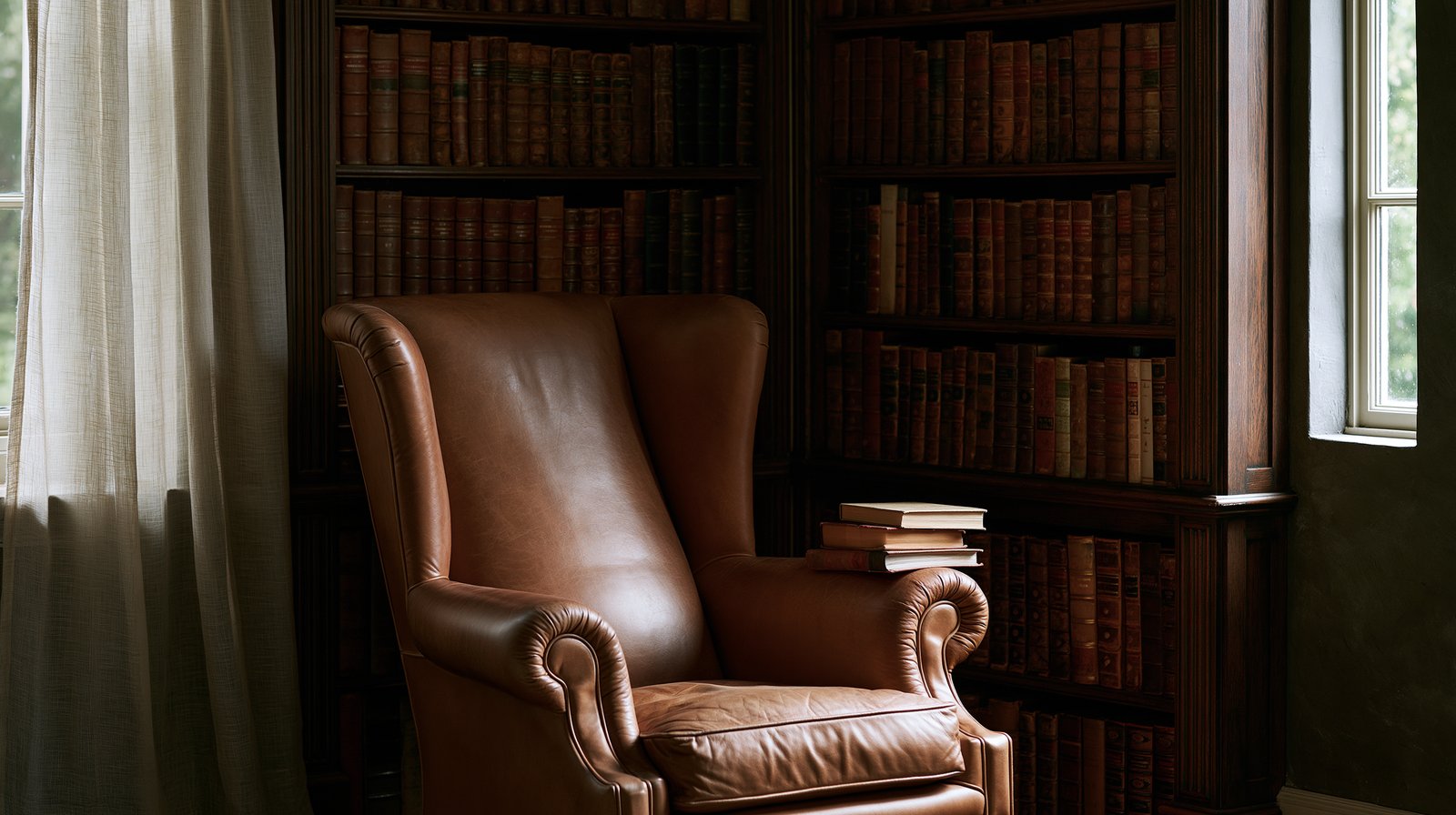
The chair doesn’t need to be surrounded by books. It needs to be at the end of them.
A reading nook implies shelving, even if what you actually have is a single case or a run of open shelves along one wall. The trick is the same as everywhere else in this list: the chair belongs at the end of the shelves, not boxed in by them, so the room still reads as a corner of the house rather than a stage set built around one piece of furniture. If your shelving already exists, this is the cheapest section in the whole post — you’re arranging what you own, not buying anything.
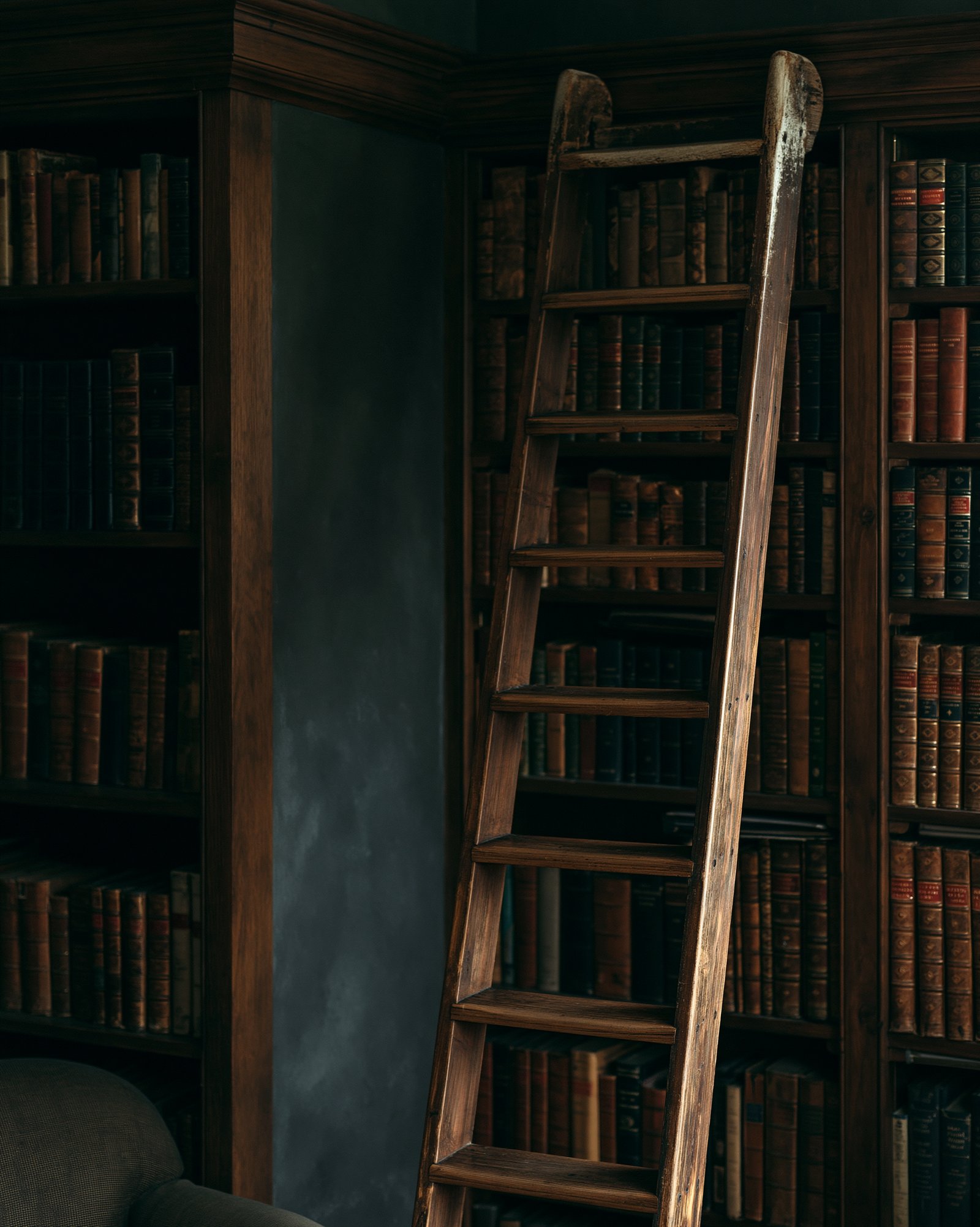
A ladder against the shelves does more to sell “library corner” than almost anything else on this list — and it’s optional.
A rolling or leaning library ladder is the one purely aspirational object here — most reading nooks don’t need one, and a nook built around low shelves shouldn’t force one in. But if your shelving runs floor-to-ceiling, a ladder propped at an angle (not mounted, not perfectly vertical) reads as a tool that gets used, not a prop that was purchased. Skip it if it doesn’t fit; the chair and the shelves do the real work either way.
The one thing propped against the books
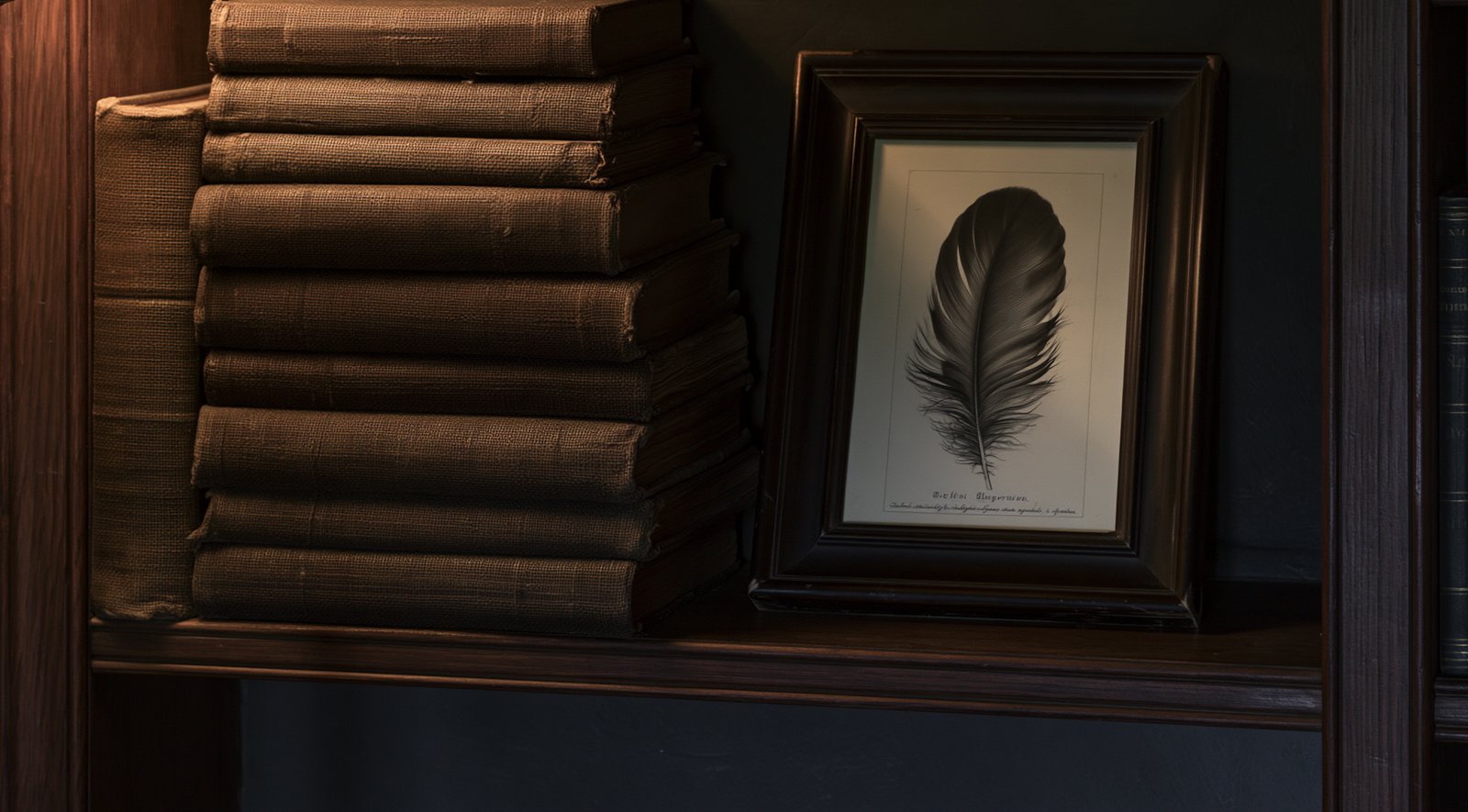
Not hung — just leaned there, the way an actual object left in a house would be.
A reading nook doesn’t need decoration so much as it needs one thing worth looking up at. A single small specimen print does this better propped against a stack of books than hung dead-center on the wall — leaning is what an object does when someone actually put it down rather than styled it, and it keeps the shelf reading as lived-in rather than staged. This tawny owl feather study from our own shop was made for exactly this spot — it’s an instant digital download, sized to fit a small desk frame, so it’s on the shelf by the weekend rather than waiting on a shipment.
Where I’d start
If you’re doing one thing this month, do the lamp — it’s the piece that decides whether the corner gets used after dark or just admired in daylight, and it’s the cheapest of the five. The chair is the biggest investment and the one worth waiting to get exactly right, since it’s the only piece you’ll actually spend hours in contact with. The throw, the table, and the footstool can follow in whatever order your budget allows — none of them changes whether the nook works, only how finished it feels once it does.
A reading nook built this way stops being the corner you meant to do something with. It becomes the fifteen minutes before bed that turns into an hour — which, for a room whose entire job is being sat in and forgotten about, is the only test that matters.
From the shop
Prints from our own Duskwood Fell shop that suit this room. Instant digital downloads, printed at home or at any print shop.
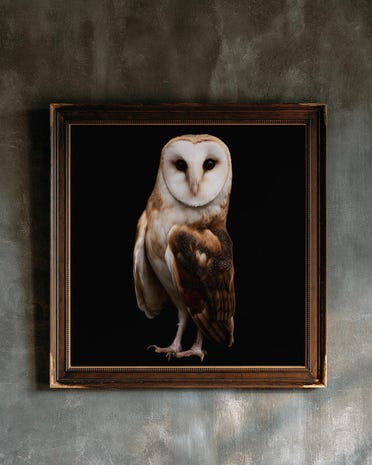
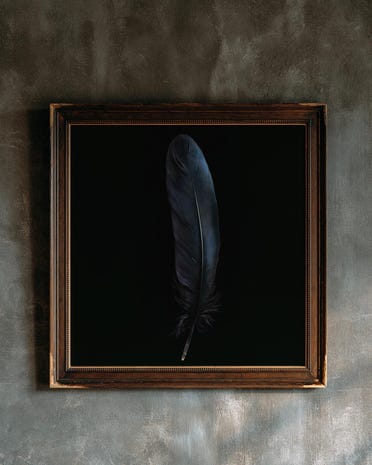
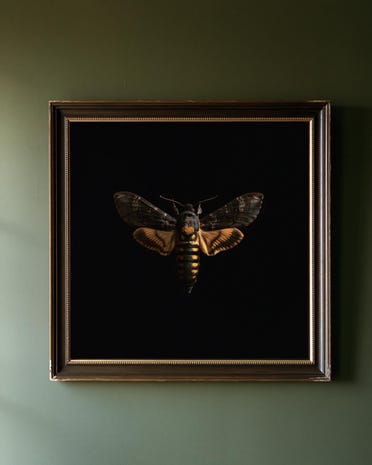
This post contains affiliate links. If you buy through these links, I earn a small commission at no extra cost to you. I only link what I’d actually consider.