
This post contains affiliate links. As an Amazon Associate, I earn from qualifying purchases — at no extra cost to you.
Ask someone to picture a dark cottagecore living room and they’ll usually describe a wall color. Charcoal, forest green, near-black — something you buy in a can. But the rooms that actually stop me, the ones I keep coming back to, aren’t dark because of what’s on the walls. They’re dark because of what’s sitting in front of them: a sofa with real depth of color, a lamp doing one specific job instead of flooding the room, a rug that looks like it’s been walked on. The paint is maybe ten percent of it. The furniture is the rest.
That’s good news, because it means you don’t need to repaint anything to start. As with the kitchen and the staircase, this is a room that transforms through what you bring into it, not what you strip out of it. Five decisions, roughly in order of impact.
The sofa carries the whole room
Everything else in a living room is negotiable. The sofa isn’t — it’s the largest object in the room and the one piece of furniture nobody can avoid looking at. A beige or grey sofa in an otherwise dark room reads as a compromise nobody quite committed to. A sofa in a real color — deep teal, bottle green, aubergine, ink navy — reads as a decision.
Velvet is doing something specific here that a flat cotton or linen weave can’t: it catches light differently depending on the angle you’re looking from, which is exactly the kind of shifting, alive quality a dark room needs so it doesn’t go flat. It doesn’t need to be real velvet in the expensive sense — a good velvet-look polyester blend photographs and wears almost identically for a fraction of the price, and holds up better against everyday use than people expect. Shop this emerald velvet sofa →
The honest caveat: velvet shows vacuum-line texture changes the way corduroy does, and some people find that distracting rather than atmospheric. If that’s you, a bouclé or a heavy cotton twill in the same dark color family gets most of the depth without the sheen.
The chair that doesn’t match
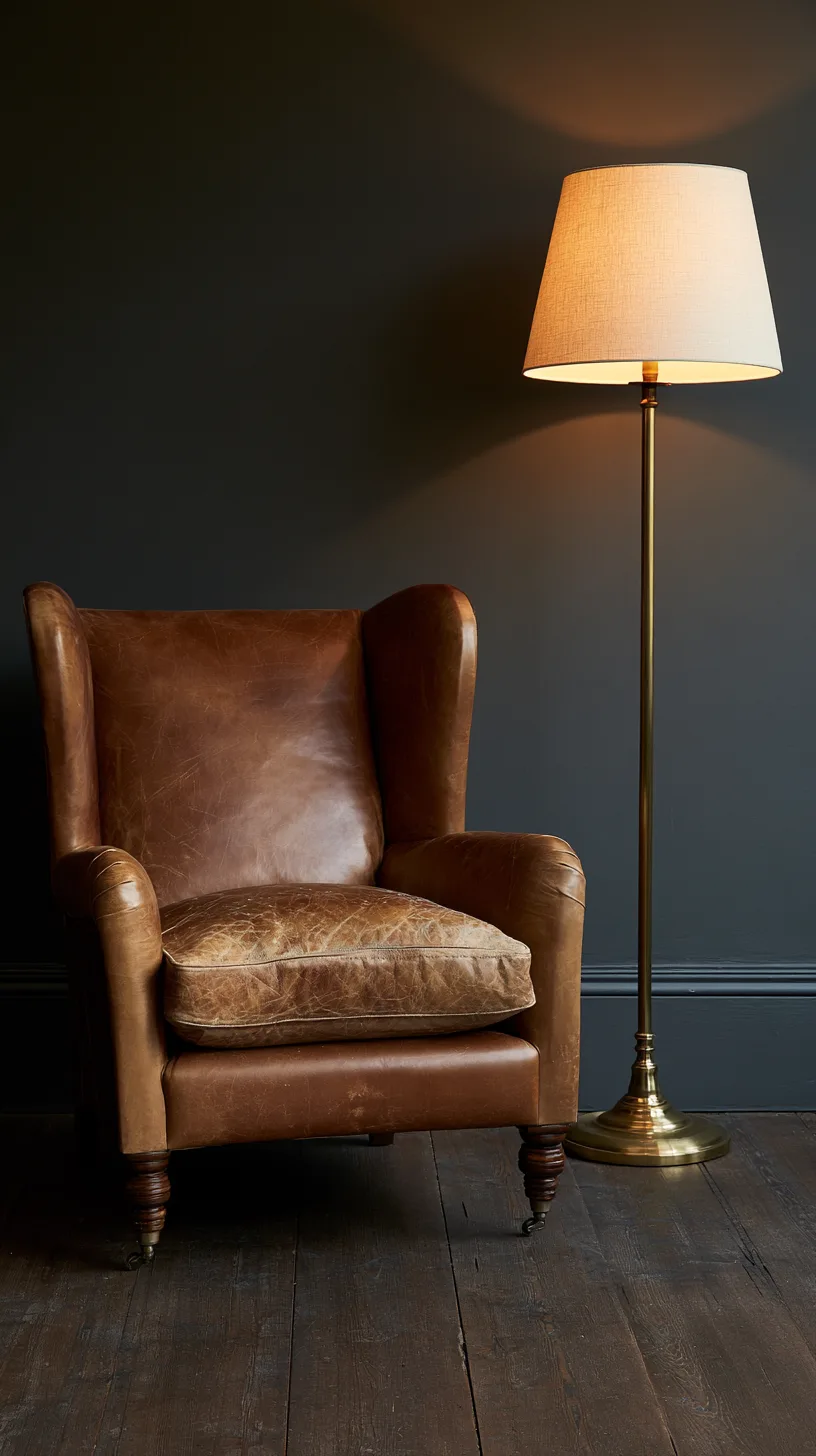
The chair nobody bought as part of a set, and the lamp that gives it something to sit under.
Every room like this has one piece of furniture that clearly wasn’t bought as part of a set — a worn leather armchair, usually, sitting at an angle to the sofa rather than squared off against it. This is the detail that separates a room that was furnished from a room that was assembled over time, because matching three-piece suites are what a showroom sells and a lived-in house never quite has.
A genuine or faux-leather wingback or club chair in a deep brown, almost black tone gives you this instantly, and the wear it develops with actual use only improves it — unlike the sofa, this is a piece that’s allowed to look a little rough at the arms. Shop this leather club chair →
One lamp, doing one job
Overhead lighting is the enemy of atmosphere in every room in this house, and the living room is no exception. A single ceiling fixture lighting the whole room evenly is the fastest way to make a carefully chosen dark palette look like a poorly lit beige one — flat light erases the color depth you just paid for.
A single table or floor lamp with a fabric or parchment shade, placed to light one corner rather than the whole room, does the opposite: it creates a pool of warm light with real shadow around it, which is what makes a dark room feel intentional rather than under-lit. A brass or aged bronze base reads warmer and older than black metal or chrome, and a cream or unbleached linen shade keeps the light itself warm-toned rather than clinical. Shop this brass floor lamp →
Curtains that reach the floor, not the sill
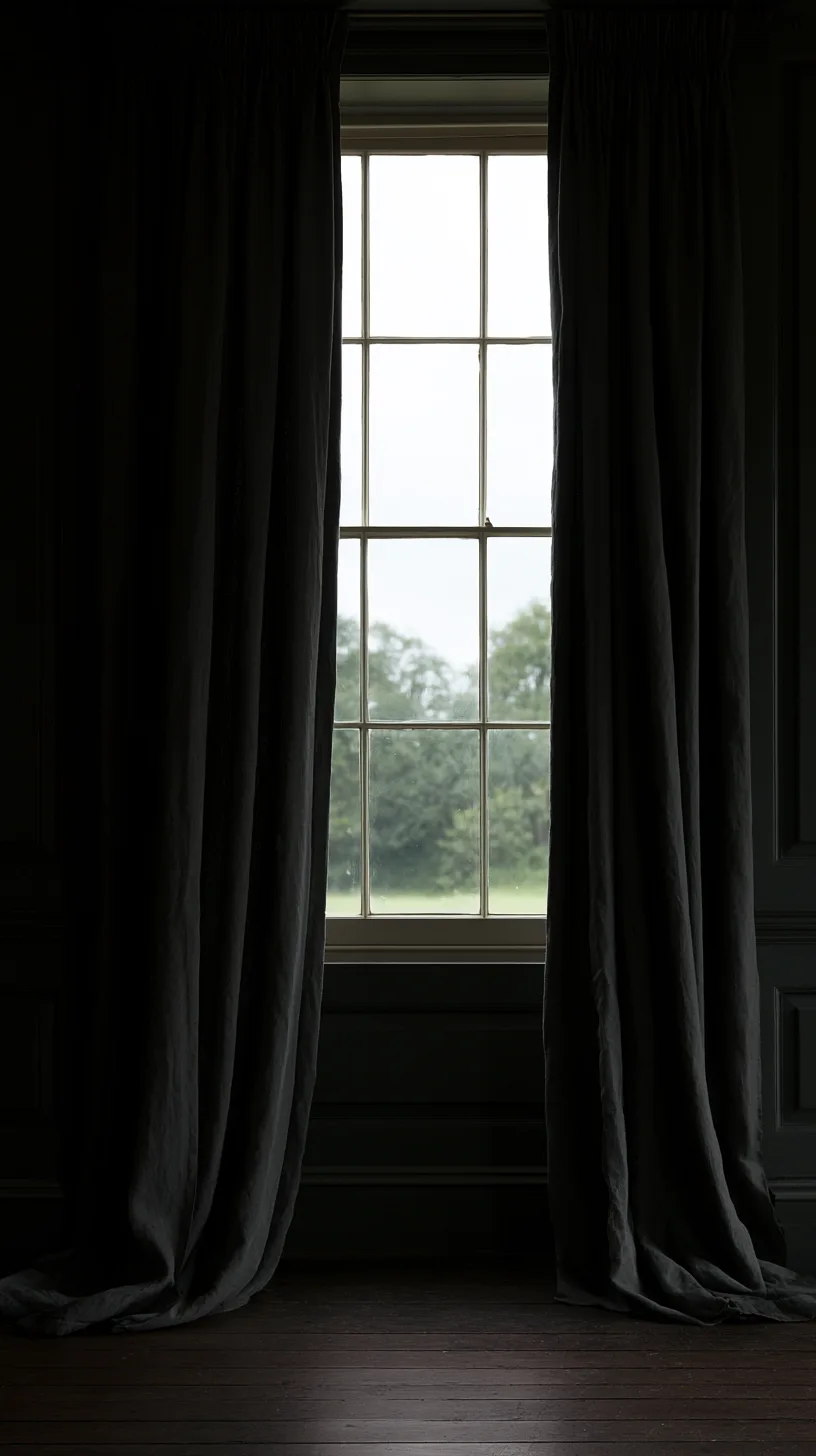
One panel drawn a hand’s width further than the other — the detail that keeps a pair of curtains from looking bought as a set.
The single fastest way to make a living room look unfinished is curtains that stop a few inches above the floor, or windows with no curtains at all doing nothing but admitting flat daylight. A curtain that pools slightly on the floor — not dramatically, just enough that it doesn’t look measured with a ruler — does for a window what a good sofa does for the room: it adds weight and gravity to a space that would otherwise read as a box with holes in it.
Heavy linen or a linen-cotton blend in a color that sits close to the wall color (a charcoal curtain against a charcoal wall, rather than a contrasting cream) keeps the room reading as one continuous dark volume instead of a dark room with pale rectangles cut into it. Shop these charcoal linen curtains →
A rug with a pattern that’s earned, not printed
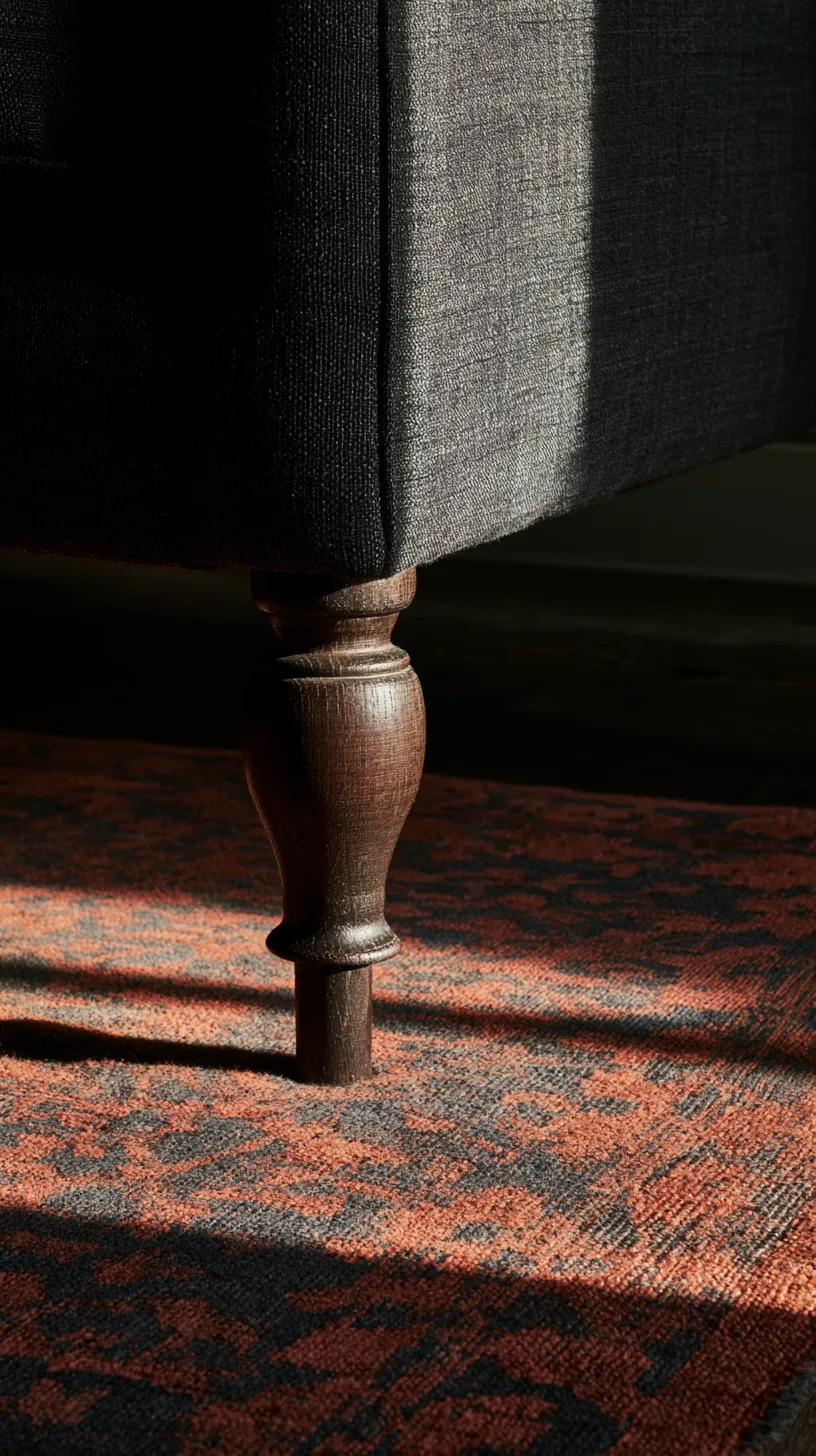
The pattern reads even in shadow — the test a plain rug never has to pass.
Bare floors photograph well and live coldly, and a plain solid rug barely improves on bare floors — it just adds texture without adding depth. What actually works in these rooms is a rug with a muted, traditional pattern: something that reads as though it’s been in the family, not something that arrived last week in a cardboard tube.
Faded Persian and Turkish-style patterns in deep, worn colors — rust, ink, bottle green, all slightly desaturated rather than jewel-bright — do this better than almost anything else in the room, because a pattern that’s meant to look faded looks correct new, in a way that a plain rug never manages to fake. Shop this faded Persian-pattern rug →
Where I’d start
If you’re doing one thing this month, do the lamp — it’s the cheapest of the five and it changes how every other decision in the room reads, the same way a single sconce changed the whole staircase. The sofa is the biggest investment and the biggest payoff, but it’s also the one purchase worth waiting to get right rather than rushing. Curtains and rug can follow whenever budget allows; the mismatched chair can wait until you find the actual one, secondhand, that makes the room feel like it has a history rather than a shopping cart.
A living room built this way stops being a place people pass through on the way to somewhere else in the house. It becomes the room people actually want to sit in — which, for a room whose entire job is being sat in, is the only test that matters.
From the shop
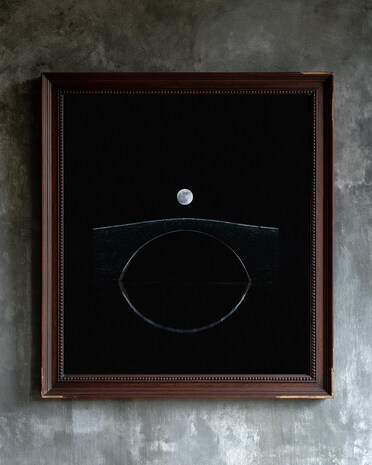
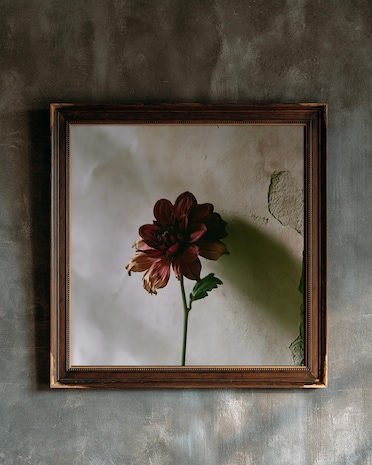
Prints from our own Duskwood Fell shop that suit this room. Instant digital downloads, printed at home or at any print shop.

This post contains affiliate links. If you buy through these links, I earn a small commission at no extra cost to you. I only link what I’d actually consider.